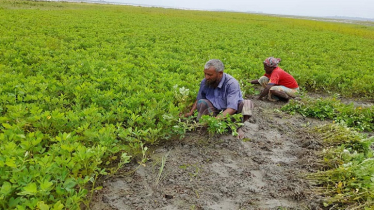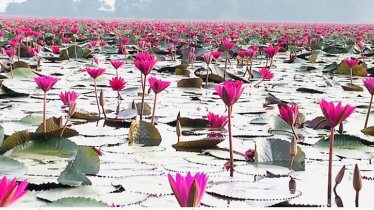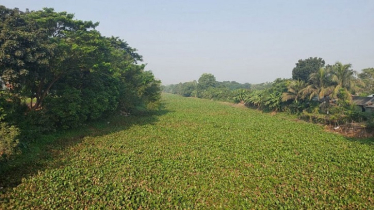

The Teesta River flowing through Sundarganj upazila has become almost lifeless, as the absence of excavation or dredging over the past 54 years has caused massive accumulation of silt and sand from upstream. As a result, the riverbed has risen significantly, completely halting navigation on at least 20 routes. Once a fast-flowing river, the Teesta has now transformed into cultivable land, bringing severe stagnation to communication networks and the local economy of the char areas.
Anchar Ali, a trader from Badamer Char in Kapasia Union, said that areas where large boats once operated are now vast stretches of sandbars. Transporting goods from the town has become extremely difficult and costly. Within the char areas, movement is now limited to walking or using horse carts, further isolating communities from markets and services.
Boat workers and fishermen have been among the worst affected by the river’s decline. Jorip Mia, a boat worker from Haripur Char, said that he owned five boats a decade ago but now has only one remaining. With the river filled with sediment, many boatmen have lost their livelihoods and are now living in extreme hardship.
Fisherman Montu Mia said that fishing activities have been almost completely halted for the past 15 years due to the lack of water in the river. To survive, many fishermen have turned to driving rickshaws and vans, while others have started small businesses to support their families.
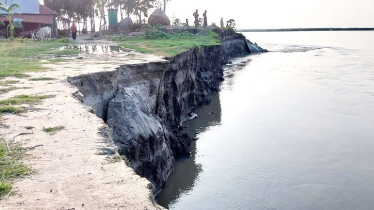
Due to the absence of excavation, the Teesta has lost its original course and fragmented into numerous distributaries. Sundarganj Upazila Nirbahi Officer Iffat Jahan Tuli said that heavy siltation has intensified riverbank erosion during the monsoon season, as overflowing water spreads beyond the narrowed channels. Every year, hundreds of homes and large areas of cropland are washed away by river erosion.
Haripur Union Parishad Chairman Mozharul Islam said that river excavation and dredging have become an urgent necessity. He warned that without such interventions, char dwellers will continue to suffer throughout the year.
Gaidandha Water Development Board Executive Engineer Hafizul Haque said that decisions regarding river excavation or permanent erosion control depend on policy-level directives from the highest levels of the government.