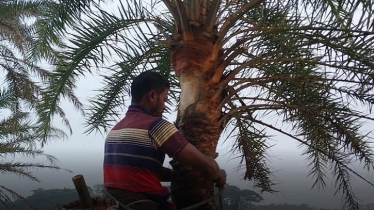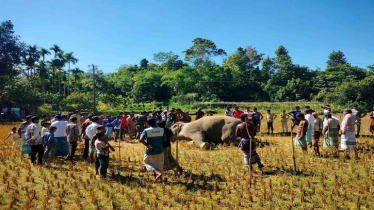

Thousands of trees planted to reduce lightning-related deaths and protect the environment in Charghat upazila of Rajshahi are now facing an existential threat due to unplanned branch cutting by the Rural Electrification Board. Over the past four years, nearly 20,000 trees have died as a result, putting a government-funded afforestation initiative worth several crore taka at serious risk.
According to sources from the Upazila Forest Department and the Barind Multipurpose Development Authority (BMDA), the BMDA planted 20,000 palm trees along 10 kilometers of roads to reduce fatalities caused by lightning strikes. In parallel, the Forest Department planted 53,000 forest and fruit-bearing trees along 53 kilometers of roads. Union Parishads and the Department of Agricultural Extension also planted several thousand palm and other tree species in the area as part of broader environmental protection efforts.
Local residents and officials allege that power distribution lines were installed through areas where trees had already been planted, without any prior planning or coordination with the Forest Department. To keep the electricity supply operational, branches and, in many cases, the tops of trees are being cut indiscriminately three to four times a year. As a result, normal tree growth has been severely disrupted. The exposed cut areas are prone to decay, causing many trees to dry up and die. Palm trees, in particular, are failing to reach the height required to effectively prevent lightning strikes, undermining the core objective of the project. Residents claim that those who protest against the cutting are threatened with disconnection of their electricity supply.
Akram Hossain, a resident of Babupura village, said branches are being cut without discrimination. He added that when he protested, his household electricity connection was disconnected, and he was later forced to apologize to have the connection restored.
The issue has triggered conflicting statements from the two government departments involved. Upazila Forest Officer Mahbubur Rahman stated that indiscriminate pruning is causing the death of approximately 5,000 trees every year. He said that despite filing cases against the electricity authorities, no effective resolution has been achieved. Due to ongoing harassment, the Forest Department has even suspended new plantation activities in the affected areas.
In contrast, Md Asaduzzaman, Deputy General Manager of the Charghat Zonal Office of Natore Rural Electrification Samity-2, said branches within 10 feet of power lines are cut strictly for safety reasons. He claimed that the Forest Department did not consult with the electricity authority before planting trees near the power lines. However, he added that discussions are now underway and assured that a solution would be reached through mutual coordination.
Mohammad Kamruzzaman, President of the Charghat Upazila unit of Bangladesh Poribesh Andolon (BAPA), warned that without coordination between departments, public funds would be wasted and environmental balance would be severely disrupted. He emphasized that protecting palm trees is particularly critical in the Barind region to reduce lightning-related deaths.
Environmental experts argue that future tree plantation and power line installation must follow strict distance guidelines. They recommend the use of underground cables or alternative routing of power lines to prevent damage to trees. Without such measures, they caution, the initiative aimed at creating a safer and greener environment will fail.
Shahadatuzzaman Rimon, Convener of Green Voice in Charghat upazila, said that if trees planted for lightning prevention and environmental protection are destroyed due to poor coordination, the intended benefits of the initiative will never be realized.