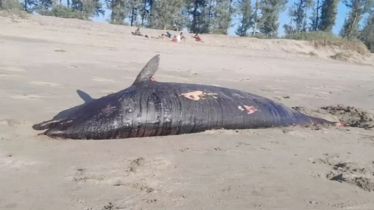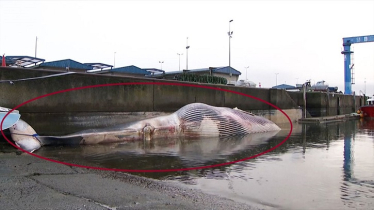
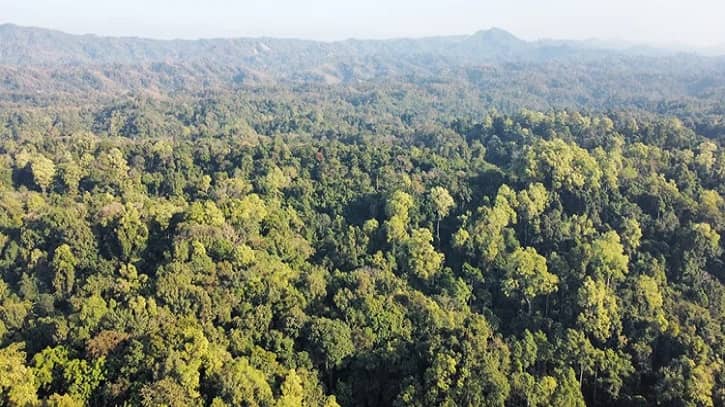
Global Environment Facility (GEF) has approved a USD 9.2 million project to support the management and restoration of forest, coastal, and marine ecosystems in Bangladesh.
The project, titled “Integrated Nature-Based Management of Bangladesh’s Jaflong–Dawki, Cox’s Bazar–Teknaf Peninsula and Sonadia Ecologically Critical Areas,” will be implemented by the Food and Agriculture Organization of the United Nations (FAO).
The USD 9.2 million initiative will work closely with the Government of Bangladesh and community-based conservation groups to restore biodiversity, promote sustainable use, and strengthen conservation efforts across three ecologically critical ecosystems in the country.
The project aims to promote more integrated and complementary approaches to protected area management, sustainable biodiversity use, and landscape-level planning. Through these approaches, it seeks to ensure effective community-based conservation, biodiversity restoration, and sustainable livelihoods in the three Ecologically Critical Areas (ECAs).
Key objectives of the project include strengthening institutional capacity for biodiversity conservation and climate adaptation; supporting climate-resilient biodiversity conservation and ecosystem restoration while improving local livelihoods; and enhancing awareness, knowledge management, and the dissemination of best practices and lessons learned in ECA management.
Since 2006, FAO has played a significant role as an implementing agency of the GEF, bringing together multiple multilateral funding mechanisms to address some of the world’s most pressing environmental challenges through coordinated action.
To date, the FAO–GEF partnership has enabled 142 countries to access critical environmental financing to support solutions across agrifood systems. The latest initiative, approved during the GEF Council meeting held this week, has pushed FAO–GEF’s portfolio of support for agriculture and food systems under its environment, climate, and biodiversity programmes beyond USD 20 billion in grants, while mobilizing an additional USD 14 billion in co-financing.
FAO Director-General Qu Dongyu stated that FAO’s portfolio and partnership with the GEF have become increasingly integrated and effective over the years, supporting the practical implementation of the Four Betters—better production, better nutrition, a better environment, and a better life—while ensuring that no one is left behind.
He further emphasized that FAO stands ready to continue partnering with countries to help them access vital financing to make their agrifood systems more efficient, more inclusive, more resilient, and more sustainable.