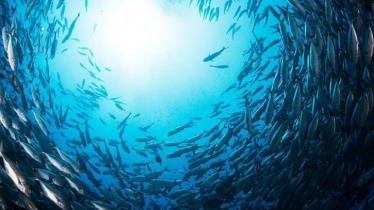
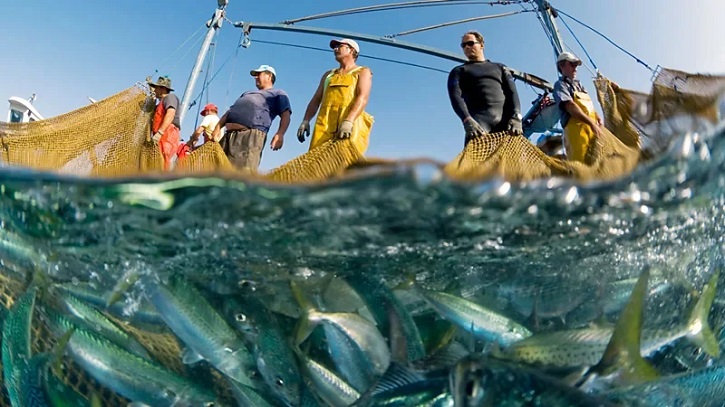
A new survey of the Bay of Bengal has revealed both significant potential and growing ecological concerns. Researchers have identified 65 new fish species within Bangladesh’s maritime boundary, including five that have never before been recorded in any global waters. For the first time, tuna fish and tuna larvae have also been detected in Bangladesh’s territory. Previously, 475 fish species were documented in the bay.
Experts say the findings open new opportunities for deep-sea fisheries, as fish were found as deep as 700 meters. However, the overall stock is declining rapidly. The availability of small pelagic fish has dropped sharply, falling from 158,000 tonnes in 2018 to just 33,000 tonnes now. Jellyfish are moving closer to the shore, oxygen-depleted zones are expanding, and microplastic presence is increasing.
The initial findings were presented on Sunday at a Dhaka hotel, based on a month-long marine survey jointly conducted by the Department of Fisheries under the Ministry of Fisheries and Livestock and the Food and Agriculture Organization (FAO) of the United Nations. With FAO support, 24 scientists from eight countries participated in the study, conducted using a UN research vessel between August 21 and September 21 this year. Data was collected from 68 stations in the Bay of Bengal.
Fisheries and Livestock Adviser Farida Akhter was the chief guest at the event, with Fisheries Secretary Abu Taher Muhammad Jaber attending as special guest. The programme was chaired by Fisheries Department Director General Md. Abdur Rauf.
The survey team was led by Norwegian scientist Erik Olsen, with Professor Sayedur Rahman Chowdhury of the University of Chittagong heading the Bangladesh team. Presenting key findings, Fisheries Department Assistant Director Md. Abdullah Al Mamun said tuna and tuna larvae have been detected in Bangladesh’s marine waters for the first time. Although most fish are caught at depths of about 200 meters, fish were found as deep as 700 meters. The 65 newly recorded species have been sent to a laboratory in South Africa for further analysis. He recommended taking steps to explore deep-sea fishing, noting that current fishing operations are limited to relatively shallow waters.
The survey also confirmed a decline in fish catch from the Bay of Bengal. Among the country’s 20 main commercial fish species, nine were considered commercially viable in 2018, but that number has now fallen to five. The stock of small pelagic fish has dropped from 158,000 tonnes in 2018 to only 33,811 tonnes in 2025. Jellyfish, once found in deeper waters, are now appearing closer to the coast, filling fishermen’s nets and disrupting fishing activities.
Professor Sayedur Rahman Chowdhury noted that oxygen levels drop significantly beyond 80 to 90 meters in certain areas, with some zones nearly devoid of oxygen. Despite this, a high presence of marine vegetation was observed. Because the research vessel cannot operate in waters shallower than 20 meters, coastal data could not be collected.
Adviser Farida Akhter warned that mismanagement is pushing the marine ecosystem toward danger. Overfishing, illegal trawlers, harmful nets, and misuse of sonar technology are contributing to resource depletion. She called for stricter control over industrial trawler licensing.
Bangladesh Marine Fisheries Association Secretary Abid Hossain said the decline in fish stocks is alarming and could endanger the future of the marine fishing industry if timely measures are not taken.