The latest EAF-Nansen Programme survey has marked a major milestone for Bangladesh’s marine biodiversity, identifying 65 new marine species previously unrecorded in the country. Among them, five species are believed to be globally new discoveries, signalling a significant breakthrough in Bangladesh’s marine research and resource assessment.
The findings were unveiled on 30 November at an event titled “EAF-Nansen Survey 2025 Finding and Way Forward for Sustainable Marine Fisheries Resource Management in Bangladesh”, held at a hotel in Dhaka. The programme was jointly organised by the Food and Agriculture Organization (FAO), the Ministry of Fisheries and Livestock, and Norad, as part of FAO’s 80th anniversary and five decades of FAO–Bangladesh partnership.
The month-long survey was conducted from 21 August to 21 September 2025 across Bangladesh’s 118,813-square-kilometre Exclusive Economic Zone. As part of the mission, researchers carried out oceanographic measurements, fisheries trawling, plankton and jellyfish studies, and microplastic sampling.
Before this survey, Bangladesh had 475 recorded marine species. While the names of the newly discovered species have not yet been released, all specimens have been sent to a research laboratory in South Africa for further analysis and verification.
According to Md Abdullah Al-Mamun, Assistant Director of the Department of Fisheries, the 2025 survey explored seabeds at depths of up to 730 metres for the first time. Access to these deeper and previously unexplored regions enabled the discovery of the new species.
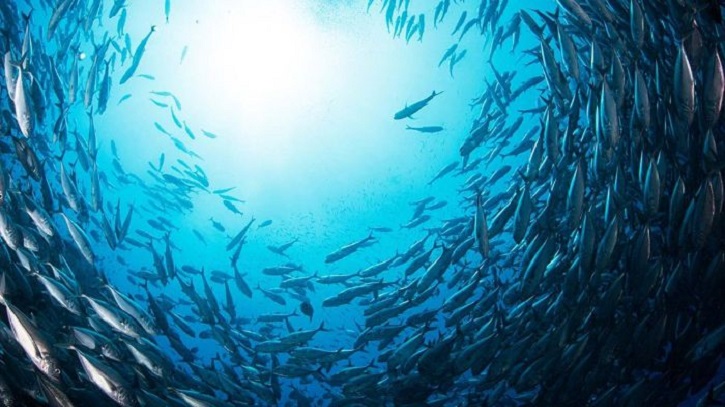
Marine biologists and specialists from Bangladesh, Sri Lanka, Thailand, Norway, and FAO participated in the international research mission. The survey collected 9,794 fish larvae, including tuna larvae, from 32 stations and documented 418 microplastic particles. For the first time, the distribution and abundance of jellyfish in Bangladesh’s marine waters were also mapped.
Announcing the results, Fisheries and Livestock Adviser Farida Akhter said the new findings will help shape future fisheries management, resource conservation strategies, and long-term marine policy planning for coastal communities.