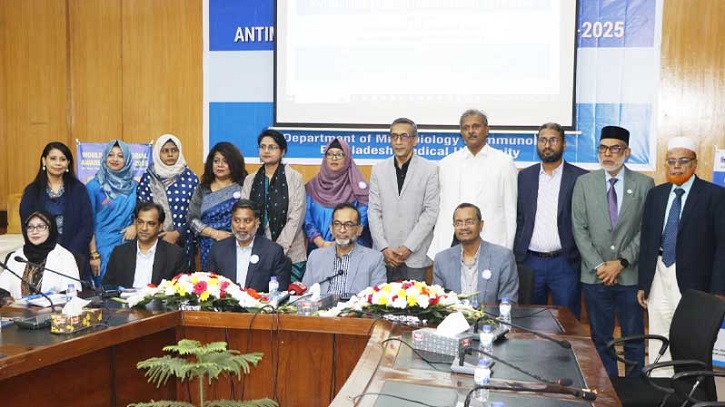
Bangladesh Medical University (BMU) has released its Antimicrobial Resistance (AMR) Report 2024–25, revealing alarming levels of antibiotic resistance based on an analysis of 46,279 patient samples collected over the past year. The findings were presented on Monday during an event marking World Antimicrobial Awareness Week, where experts warned that the effectiveness of numerous widely used antibiotics, including ciprofloxacin, amoxicillin, ceftriaxone, gentamicin and meropenem, is rapidly diminishing.
The report indicates that one in every four patients tested had detectable pathogens, highlighting the growing challenge of drug-resistant infections. The BMU Biology Department analysed the samples over the past year, and the results show widespread resistance across multiple antibiotic classes, including even powerful drugs such as meropenem and tigecycline.
One of the most concerning findings relates to Salmonella Typhi, a Gram-negative bacterium responsible for bloodstream infections. Azithromycin, typically considered a last-resort option, is losing its reliability. The resistance rate for Salmonella Typhi has increased sharply from 31 percent in 2022 to 83.4 percent this year, signalling a rapid decline in treatment options.
The study also shows escalating resistance in Klebsiella and Acinetobacter species. Klebsiella’s resistance to ceftriaxone, ciprofloxacin and gentamicin has risen from below 50 percent in 2022 to more than 80 percent this year. Acinetobacter has shown a similar trend, with resistance to these antibiotics climbing from under 35 percent to over 60 percent. Escherichia coli has shown slight improvements in some categories, but resistance levels remain high, ranging between 55 and 74 percent.
Health experts attribute the sharp rise in antimicrobial resistance to excessive antibiotic prescriptions, incomplete treatment courses, indiscriminate use of antibiotics in livestock and aquaculture, weak infection-control systems in hospitals, inadequate sanitation and the lack of new antibiotic development. These factors are making treatment more complicated, prolonging recovery time and increasing the risk of death.
Presenting the keynote paper, BMU Associate Professor Dr Shaheda Anwar noted that 24 percent of the analysed samples, totaling 11,108, contained various pathogens. Many of these pathogens displayed resistance to multiple antibiotics. She explained that such resistance commonly develops due to misuse or overuse of medications, as microorganisms adapt and become harder to eliminate, turning routine infections into potentially life-threatening conditions.
Presiding over the event, Professor Dr Abu Naser Ibne Sattar urged the public to refrain from purchasing antibiotics without a prescription and emphasised the importance of handwashing, vaccination, safe food preparation and strict infection control in hospitals. He warned that self-medication, incomplete dosages and excessive antibiotic use in animals are enabling bacteria to evolve rapidly, leading to higher treatment costs, increased ICU admissions and greater mortality risks.
BMU Pro-Vice-Chancellor Professor Dr Md Abul Kalam Azad said antimicrobial resistance has reached a critical level and called for prompt, coordinated action to address this growing public health threat. BMU Vice-Chancellor Professor Dr Md Shahinul Alam, the chief guest, stressed that responsibility for both the problem and its solution lies with the medical community. He said BMU must take a leading role in research, guideline development and implementation, and announced that a national guideline on antimicrobial resistance should be prepared within the next three months.
The release of the BMU report comes at a time when the World Health Organization and the Institute of Epidemiology, Disease Control and Research have issued warnings about the rapid rise of antibiotic resistance in Bangladesh. The WHO recently cautioned that when pathogens stop responding to antimicrobial medications, treatment becomes difficult or even impossible, significantly increasing the risk of severe illness, disability and death.