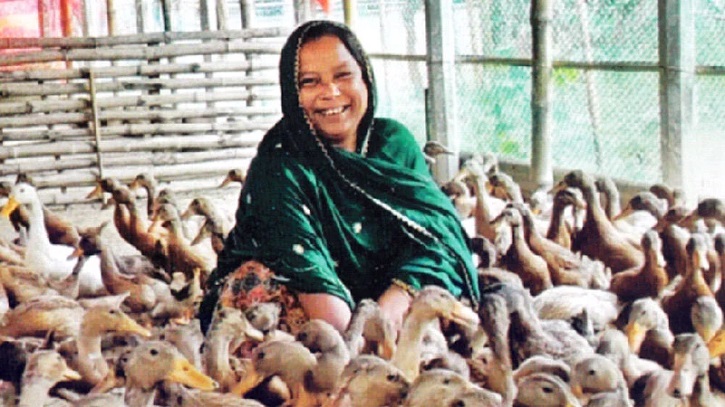
Shefali Begum, a 39-year-old resident of Singraund village in Gauripur, Mymensingh, once faced severe food insecurity, debt, and uncertainty when her family’s income collapsed during the COVID-19 pandemic. With her husband’s earnings sharply reduced, the household struggled to meet basic needs, pushing the family into an increasingly fragile situation. At that critical moment, the Resilience, Entrepreneurship and Livelihood Improvement (RELI) Project of the Social Development Foundation (SDF) opened a pathway toward recovery and long-term stability.
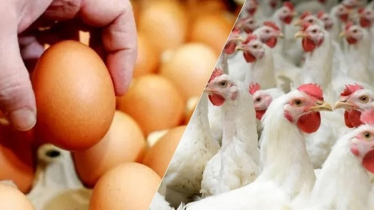
Shefali joined the RELI project in 2022, beginning her journey with regular savings while participating in training on leadership development, basic accounting, and poultry rearing. These interventions gradually strengthened her confidence and decision-making capacity. With access to a loan of BDT 20,000 at a concessional interest rate of four percent, she launched a small broiler farm with 200 chickens. Within just 28 days, her first production cycle generated a profit of BDT 18,000. Over subsequent cycles, her cumulative profit reached nearly BDT 70,000.
Encouraged by consistent returns, Shefali expanded her operations in 2023 by taking an additional loan of BDT 50,000 to establish a farm with 1,000 chickens. Her strong performance led the project to provide her with a special loan of BDT 100,000 in 2024. She invested this amount in purchasing an easy bike for her husband, creating an additional and stable source of income. The vehicle now generates an average daily income of BDT 500.
With technical support from the local Livestock Office, Shefali also ventured into rearing Campbell ducks. Income from duck sales and egg production together now yields an annual profit of approximately BDT 200,000. Using her earnings, she has constructed a semi-permanent house for her family. After years of struggle against poverty, Shefali has emerged as a symbol of resilience, self-reliance, and confidence in her community. Her success has inspired many others in her village to engage in poultry and duck farming. Reflecting on her journey, she says that without SDF’s support, her daughter’s education would have been discontinued, whereas today she can envision a secure and hopeful future for her children.
Shefali’s story represents only one example of the broader impact of the RELI project. Over the past four years, more than 567,000 people have benefited from the initiative in various ways. Among them, 151,657 individuals have experienced income growth of at least 30 percent, nearly double the project’s midterm target. The project was launched in 2021 with funding equivalent to USD 300 million. The government received this funding as a concessional loan from the World Bank at two percent interest and allocated it to SDF as grants to support poor and vulnerable populations. The five-year project is scheduled to conclude in May next year.
A recent independent midterm evaluation of the project was conducted by the private research organization Research and Policy Integration for Development (RAPID). The evaluation notes that although Bangladesh has made notable progress in poverty reduction over recent decades, this momentum has slowed significantly in recent years. Despite this challenging context, the RELI project has demonstrated strong performance and measurable outcomes.
According to the midterm assessment, RELI beneficiaries have achieved income growth and poverty reduction at a pace significantly faster than the national average. Key indicators have exceeded targets by a wide margin. A total of 37.2 percent of beneficiaries, equivalent to 151,658 individuals, recorded income growth of at least 30 percent, almost double the midterm benchmark. In addition, 38.2 percent of participants experienced a shift in poverty status, moving from extreme poverty to poverty, or from poverty to non-poverty. A total of 3,828 entrepreneurs received targeted support, with their incomes increasing by more than 40 percent. The evaluation also highlights major improvements in community cohesion and financial discipline. Participation in savings programs rose sharply from 25.4 percent to 98.4 percent among project members.
One of the most significant strengths of the RELI project is its focus on women’s participation and leadership. Women remain underrepresented in Bangladesh’s labor market, yet among those who achieved income growth, poverty reduction, and improved resilience through the project, between 95 and 97 percent are women. At the leadership level, women occupy 85 percent of positions in second-tier community institutions. Beyond income gains, the project has also driven improvements in health, nutrition, and behavioral practices. Through health and nutrition support committees and behavior change campaigns, households have adopted better basic health practices, leading to reduced healthcare expenditures and a notable decline in illness rates.
The evaluation identifies targeted beneficiary selection as a key driver of the project’s success. Community-based groups are responsible for identifying eligible members from among the poorest and most vulnerable rural populations, ensuring that financial resources reach those most in need. The project operates across five regions in 20 high-poverty districts, selected based on Household Income and Expenditure Survey data indicating poverty rates above 30 percent.
RELI is implemented through four core components: financing through the Village Development Fund, cash transfers and loans for income-generating activities, development of second-tier community institutions, and promotion of commercial agriculture and rural entrepreneurship.
SDF Chairman Dr. Mohammad Abdul Majid stated that the project is making a substantial contribution to poverty reduction in rural areas. He noted that women who once lacked confidence and communication skills are now becoming economically self-reliant leaders through training and financial support. However, he also acknowledged that the project faces inherent risks, as it is financed through borrowed funds, and loan-based development initiatives require careful management to ensure sustainability.