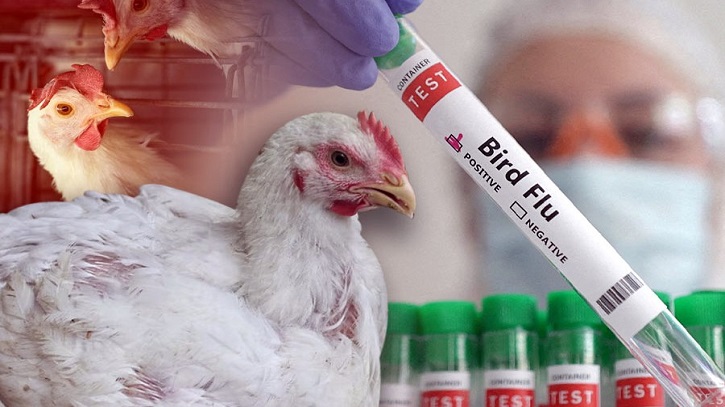
Scientists have long warned that avian influenza, commonly known as bird flu or H5N1, could one day cross from birds to humans in a way that triggers a global public health crisis. A form of influenza that has become entrenched across South and Southeast Asia, avian flu was first detected in China in the late 1990s and has since occasionally infected humans.
According to the World Health Organization, between 2003 and August 2025, a total of 990 human cases of H5N1 infection were reported across 25 countries, resulting in 475 deaths. This represents a fatality rate of approximately 48 percent.
In the United States alone, more than 180 million birds have been affected by the virus. The outbreak has spread to more than 1,000 dairy farms across 18 states, and at least 70 people—mostly farm workers—have been infected. Several hospitalizations have occurred, and one death has been reported.
Although the virus primarily infects birds, its ability to cross species has raised increasing concern. In January this year, three tigers and one leopard died after contracting H5N1 at a wildlife rescue center in Nagpur, India.
In humans, symptoms resemble those of severe influenza, including high fever, cough, sore throat, body aches, and in some cases, conjunctivitis. Some infected individuals show no symptoms at all. While the overall risk to humans remains low at present, health authorities continue to monitor the virus closely due to its pandemic potential.
These concerns prompted Indian researchers Philip Cherian and Gautam Menon of Ashoka University to conduct a new peer-reviewed modeling study to understand how an H5N1 outbreak might unfold among humans and which early interventions could prevent it from spreading widely. Published in the journal BMC Public Health, the study uses real-world data and computational methods to simulate how an outbreak could evolve under different conditions.
“There is a real risk of an H5N1 pandemic in humans,” Professor Menon told the BBC. “But with improved surveillance and faster public health responses, there is hope that such an outbreak could be stopped early.”
The researchers suggest that a bird flu pandemic would likely begin quietly, with the virus jumping from infected birds to a single human, most likely a farmer, market worker, or someone involved in handling poultry. The greatest danger, they note, lies not in the initial infection, but in whether sustained human-to-human transmission follows.
Real-world outbreaks typically begin with limited and fragmented data. To account for this uncertainty, the researchers used an open-source simulation platform called VeratSim, originally developed for COVID-19 modeling but adaptable for other infectious diseases. Simulation modeling creates a virtual representation of real-world processes, allowing researchers to test scenarios and interventions digitally before they occur in reality.
One of the most critical lessons for policymakers, the researchers say, is how short the window for intervention may be before an outbreak becomes unmanageable. The study estimates that once the number of human infections exceeds between two and ten cases, the risk of the virus spreading beyond primary and secondary contacts increases sharply.
Primary contacts are defined as individuals who have had direct and close interaction with an infected person, such as family members, caregivers, or close coworkers. Secondary contacts are those who have not interacted directly with the infected individual but have had close contact with someone in the primary group.
The simulations show that if households of primary contacts are quarantined immediately after just two infections are detected, an outbreak can almost certainly be contained. However, once infections reach around ten cases, the likelihood that the virus has already spread more broadly becomes high, making early intervention far less effective.
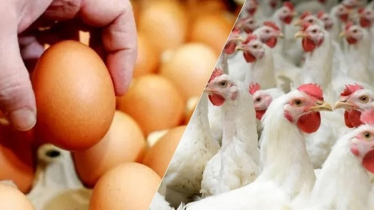
To ground the model in a real-world setting, the researchers selected a single village in Namakkal district of Tamil Nadu, a region widely regarded as the hub of India’s poultry industry. Namakkal has more than 1,600 poultry farms and approximately 70 million chickens, producing over 60 million eggs daily.
Using a synthetic community approach, the researchers created a virtual village of 9,667 residents, incorporating households, workplaces, and market areas. A single infected bird was introduced into this synthetic population to simulate real-world transmission dynamics. A synthetic community refers to a computer-generated population designed to mimic real demographic and behavioral patterns.
The simulation showed that the virus initially emerges in a workplace, such as a medium-sized poultry farm or a wet market. It then spreads among people present at that site as primary contacts, before moving on to secondary contacts through households, schools, and other workplaces. Together, these settings form a stable network through which the virus propagates.
By tracking primary and secondary infections, the researchers identified key epidemiological indicators, including the basic reproduction number, or R0, which represents the average number of people an infected individual transmits the virus to. Because no sustained human pandemic has yet occurred, the researchers modeled a range of possible transmission speeds.
They then tested the effectiveness of various interventions, including culling infected birds, quarantining close contacts, and targeted vaccination. The results were clear. Culling infected birds is effective, but only if it occurs before the virus spills over into humans.
Once human infection has occurred, time becomes the most critical factor. Isolating infected individuals and quarantining their households can halt transmission at the secondary stage. However, once tertiary transmission occurs—meaning the virus spreads to contacts of contacts—control becomes extremely difficult without aggressive measures, including lockdowns.
Targeted vaccination programs help limit how widely the virus can spread, but they have relatively limited impact on reducing immediate transmission risk during the early stages of an outbreak.
The simulations also revealed a complex trade-off. If quarantine is imposed too early, families may remain together for extended periods, increasing the risk of household transmission. If quarantine is imposed too late, it becomes largely ineffective in stopping the outbreak.
The researchers acknowledge several limitations in their model. It is based on a synthetic village with fixed household sizes, workplaces, and movement patterns, and does not account for simultaneous outbreaks driven by migratory birds or interconnected poultry supply chains. Behavioral changes, such as mask-wearing following reports of bird deaths, were also not included.
Atlanta-based Emory University virologist Seema Lakdawala highlighted another limitation, noting that the model assumes influenza transmission is highly efficient. “Transmission is complex, and not all influenza strains behave the same way,” she said. Recent research suggests that not all flu-infected individuals shed virus into the air at the same rate, meaning a small subset of people may drive most transmission.
This pattern resembles the rapid spread observed during COVID-19, though it has been less clearly documented for influenza. Such variability could significantly influence how the virus spreads through human populations.
If H5N1 were to establish sustained transmission among humans, Dr Lakdawala believes it would cause major disruption, likely resembling the 2009 swine flu pandemic rather than COVID-19. She noted that global preparedness for influenza pandemics is stronger, with approved antiviral drugs available that are effective against various H5N1 strains, as well as stockpiled H5 vaccines that could be deployed relatively quickly.
However, she cautioned against complacency. If H5N1 becomes established in humans, it could reassort with existing influenza strains, potentially increasing its public health impact. Such changes could alter seasonal flu patterns and lead to unpredictable and disruptive outbreaks.
The Indian researchers emphasize that their simulations can be run rapidly and updated as new data becomes available. With further refinement, including improved reporting and accounting for asymptomatic cases, such models could become invaluable tools for public health officials during the earliest stages of an outbreak, helping identify which interventions matter most before transmission accelerates.