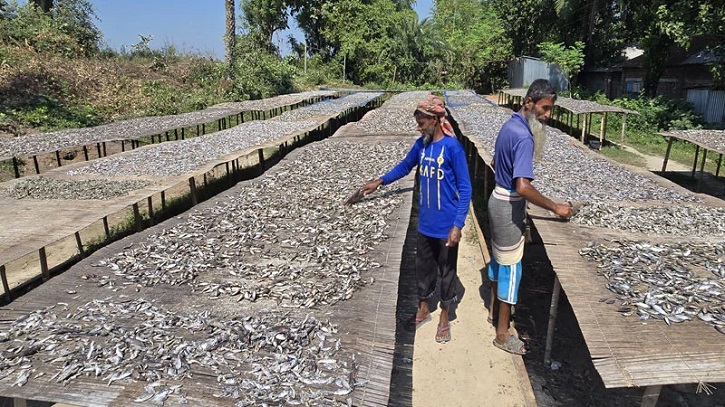
Upon entering Bhar Tetulia village in Atrai upazila of Naogaon along the railway line, the familiar aroma of dried fish once filled the air. Under the sunlight, rows of drying yards shimmered as workers busily turned fish by hand, while piles of dried fish were stacked nearby for shipment to different parts of the country. This year, that familiar scene has largely disappeared. Many drying yards now lie empty, and anxiety is visible on the faces of workers and traders alike.
A shortage of indigenous fish has emerged in Atrai upazila, a fisheries-rich region in northern Bangladesh. Due to reduced water levels in rivers and water bodies, fish availability has declined sharply. As a result, production of dried fish, a traditional livelihood in the area, has fallen significantly, creating concern among dried fish traders and laborers.
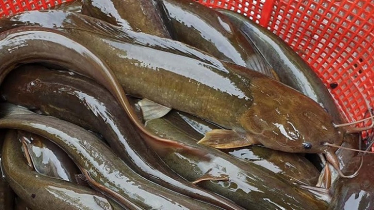
Atrai upazila depends heavily on rivers and wetlands for fisheries. For generations, dried fish has been produced from native species such as punti, khalisha, taki, shoal, chanda, and chopra. These dried fish products are supplied to markets across Bangladesh and are also exported to India.
In addition to Atrai, dried fish is produced in parts of neighboring Manda upazila, with supplies distributed to various districts across the country.
During the current monsoon season, insufficient river water has disrupted fish breeding. As a result, fish supply has declined sharply. With demand exceeding availability, prices of key fish species such as punti, khalisha, and taki have increased by 40 to 50 taka per kilogram. This has raised production costs, leaving many drying yards unused.
Bhar Tetulia village is widely known as a dried fish village. Drying yards line both sides of the railway station, and dried fish trading remains the primary source of income for local residents. Traders say uncertainty has now emerged over production this year due to the lack of fish.
According to traders, dried fish from Naogaon is supplied to Saidpur, Rangpur, Nilphamari, Lalmonirhat, Jamalpur, and Dhaka. From Saidpur, shipments are transported by train to Tripura, India.
The Ahsanganj fish wholesale market in Atrai upazila is the district’s main fish trading hub, from where fresh fish is purchased for dried fish processing. Currently, khalisha fish is selling at 75 to 80 taka per kilogram, punti at 100 to 165 taka, and taki at 200 to 220 taka. With shoal and boal fish largely unavailable, production has declined further, and traders report a downturn in business.
Dried fish trader Rakibul Hasan from Bhar Tetulia village told reporters that he sold dried fish worth approximately 2.5 million taka in a single season last year. This year, he has managed to produce dried fish worth only about 500,000 taka so far. Rising fish prices have significantly reduced profit margins.
Azhar Ali, a trader from Singa village, said that drying three maunds of punti fish produces one maund of dried fish, which sells for 10,000 to 12,000 taka. In the case of khalisha fish, four maunds are required to produce one maund of dried fish, which sells for around 10,000 taka.
Another trader, Sadek Molla, said fish availability is declining as wetlands and water bodies dry up. He also blamed the unrestricted use of China nets for damaging fish breeding, calling for strict action to stop illegal fishing practices.
Atrai Upazila Senior Fisheries Officer Md Maksudur Rahman said training is being provided to dried fish traders to ensure safe and quality production. He added that enforcement drives are ongoing to curb illegal fishing.
Naogaon District Fisheries Officer Ferdous Ali said that around 400 people in Atrai and Manda upazilas are directly and indirectly involved in the dried fish trade. Despite reduced water levels, he expects approximately 250 tonnes of dried fish to be produced in the district this year, with an estimated market value of 50 to 60 million taka.
Stakeholders believe that urgent and coordinated measures are needed to increase the breeding of indigenous fish, stop the use of illegal fishing nets, and improve dried fish quality to protect this traditional industry and the livelihoods dependent on it.