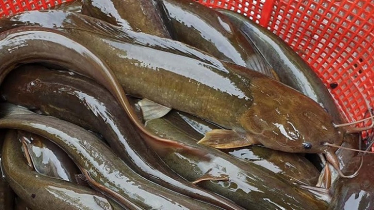
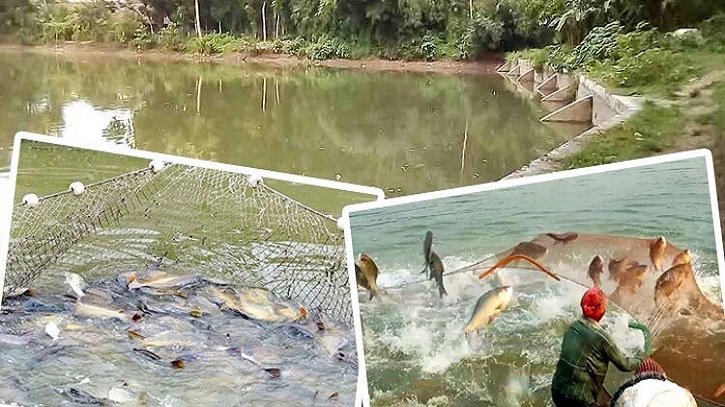
During the monsoon season, rivers, canals, wetlands, and ponds across Bangladesh fill with water, creating natural conditions for fish breeding and growth. The season is often described as a gift of nature for fish cultivation. However, to harness this potential, fish farming must be carried out through planned and scientific methods. With proper preparation and care, fish farming during the monsoon can yield significant profits.
In many regions, wetlands, floodplains, and submerged fields remain unused for crop production during this time. These waterbodies can easily be converted into fish farms through rehabilitation and management. As such areas are often divided among multiple farmers, community-based initiatives are seen as an effective approach, fostering both collective development and social awareness while generating income for local people.
Preparing ponds is a critical step in monsoon fish farming. Predatory fish, weeds, and waste must be removed before applying lime and organic fertilizers at proper ratios to generate natural food in the water. Healthy fingerlings of 8–12 centimeters in length should then be released following recommended practices. Because heavy rainfall and waterlogging can rapidly alter water quality, it is essential to regularly test for pH, temperature, dissolved oxygen, carbon dioxide, and ammonia levels. Lime and zeolite should be applied as required to maintain balance.
Farmers must also take extra precautions during this season, including regulating feed supply, preventing polluted water inflow, and ensuring fish cannot escape from ponds. Strong embankments, reliable screening at inlets and outlets, and protective measures such as bamboo fencing or nets help minimize losses during floods or excessive rainfall.
For higher yields, mixed-farming techniques are recommended, where species like rohu, catla, mrigal, tilapia, bighead, and silver carp are cultured together to maximize pond productivity. Intensive or semi-intensive methods allow higher output in limited spaces if timely feeding and care are ensured. Providing shelters such as submerged bushes and attractants like oil cake or molasses further supports fish growth.
Special attention is needed for fingerling supply and nursing. Because transportation weakens fingerlings, gradual acclimatization is vital before release into ponds. Rearing them first in nursery ponds increases survival rates before transfer to larger cultivation ponds.
Fertilizer and feed management also require caution during heavy rainfall, as overuse or poor-quality inputs can contaminate water, causing indigestion, disease, or mortality. Limited feeding and the application of lime or other water-treating agents as necessary help maintain water purity.
At harvest, proper arrangements for drums, ice, and live transportation ensure fish retain their weight and quality. Although disease outbreaks are less common in the monsoon, poor water quality can trigger infections, which should be treated under expert guidance.
While monsoon fish farming presents challenges, it also offers immense opportunity. With planned initiatives, scientific management, and timely interventions, the abundant waters of the rainy season can be transformed from a challenge into a source of economic success. Such progress would not only help address nutritional deficiencies but also strengthen the long-standing identity of a self-reliant “fish-and-rice Bengali” society.