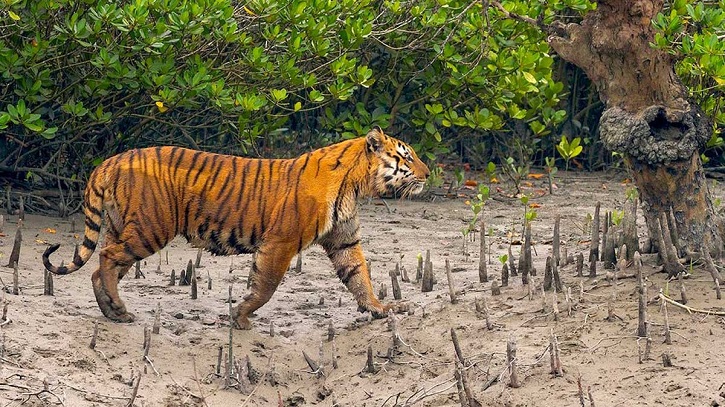
Today, July 29, marks Global Tiger Day, observed in Bangladesh and other tiger-range countries through various awareness and conservation events. In a promising development, the latest camera-trapping survey conducted on October 7, 2024, has recorded 125 Royal Bengal Tigers in the Sundarbans—up from 114 tigers counted during the previous survey conducted on May 22, 2018. This indicates an increase of 11 tigers over the past eight years.
This year’s theme, “Harmonious Coexistence Between Humans and Tigers,” underscores efforts to protect and restore tiger populations. However, despite the modest growth, significant threats persist. Between 2001 and 2024, a total of 55 tiger deaths were recorded in the Bangladesh portion of the Sundarbans, which spans 6,017 square kilometers and is recognized as a UNESCO World Heritage Site. Only 15 of those deaths were due to natural causes. Fourteen tigers were beaten to death after entering human settlements, one was killed during Cyclone Sidr in 2007, and the remaining 25 were killed by poachers.
Historically, the illegal trade in tiger body parts, driven by high market demand, was rampant. Poachers would traffic tiger skins, bones, teeth, and claws through organized smuggling syndicates operating within and beyond national borders.
Forest officials and wildlife experts warn that poaching, along with ongoing habitat destruction, continues to threaten the survival of tigers in the Sundarbans. Rising sea levels, driven by global warming and climate change, are eroding the tigers' habitat. Projections indicate that by 2070, Bangladesh may no longer have suitable land for tigers if the current trends persist.
Despite these concerns, there are signs of progress. Improved surveillance and the surrender of forest bandits have significantly reduced poaching incidents. Additionally, authorities have expanded the area designated as protected forest from 23 percent to 51 percent of the total Sundarbans region, allowing tigers greater freedom to roam and reproduce. As part of ongoing efforts, access to the forest is restricted from June to August during the tigers’ breeding season, and entry by tourists and forest-dependent communities is prohibited during this period.
According to the Forest Department, more than 100 people have been killed and nearly as many injured in tiger attacks in the Sundarbans and surrounding localities since 2008.
Dr. Shiuli Sutradhar, Head of the Zoology Department at Bagerhat Government PC College, identified poaching and armed forest banditry as key drivers behind declining tiger numbers. She stressed the importance of ensuring safe habitats, ample prey, and unhindered breeding conditions to sustain tiger populations.
Dr. Sheikh Faridul Islam, Chairman of Save the Sundarbans Foundation, highlighted that the Sundarbans once supported over 400 tigers. He criticized lax enforcement in the past, which allowed poachers to decimate the population. He called for heightened vigilance across all forest divisions and emphasized that rising sea levels pose a severe risk to the remaining tiger habitat.
Divisional Forest Officer of the East Sundarbans, Mohammad Rezail Karim Chowdhury, attributed the recent increase in tiger numbers to decreased poaching activity. He confirmed that enhanced protection efforts—including the formation of smart patrol teams and the expanded designation of protected areas—have contributed to safer environments for tiger reproduction and movement.