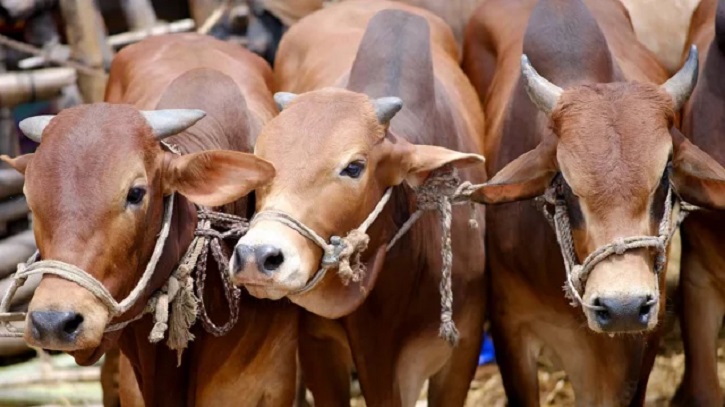
The popularity of indigenous cattle breeds is steadily rising across Bangladesh, prompting many to ask how they can be identified. Typically, native breeds have less body fat compared to crossbred or exotic varieties and are smaller in size. While they produce less milk, their meat is considered tastier.
Dr. Bhobotosh Kanti Sarkar noted that among the most popular native cattle breeds are Mirkadim from Munshiganj, Red Chittagong Cattle (RCC) from Chattogram and surrounding areas, Pabna Cattle, and the Sirajganj breed.
The Pabna Cattle, also known as the Pabna breed, are commonly found around the Chalan Beel area. Their color is usually white or ash mixed with white, though some are red, gray, or mixed. These small but sturdy animals require little feed and are highly resistant to disease. While they primarily graze on grass, crossbreeding with Friesian cattle has been promoted in recent years to increase milk production.
The Sirajganj breed, mainly found in districts along the Padma River, resembles the Pabna breed but tends to be slightly larger in size. These cattle have a more prominent and muscular hump. Officials at the Department of Livestock Services say this breed is also gaining recognition for its resilience and productivity.
Over the past few years, crossbreeding efforts with Shahiwal and Brahma cattle have also produced new varieties tailored to meet the growing demand for meat. These hybrid breeds have become especially popular in cattle markets during the Eid-ul-Adha season.
Mirkadim’s famous “Dhobal Gai” is larger than most native cattle and is typically white, sometimes marked with gray or black patches. Its meat is known for being tender, with less fiber and thinner bones, making it softer and fattier. These cattle are relatively inexpensive to raise and can be fed with mustard oil cake, wheat, lentil husk, and maize powder.
The Red Chittagong Cattle (RCC) is another notable indigenous breed, easily recognized by its red coat and reddish hooves. Small in size with a modest hump, RCC requires little feed and adapts well to the local climate, which makes it highly favored by farmers in Chattogram and nearby districts.
The rising preference for native cattle highlights their adaptability, taste, and cost-effectiveness, ensuring their sustained demand in both rural households and urban markets.