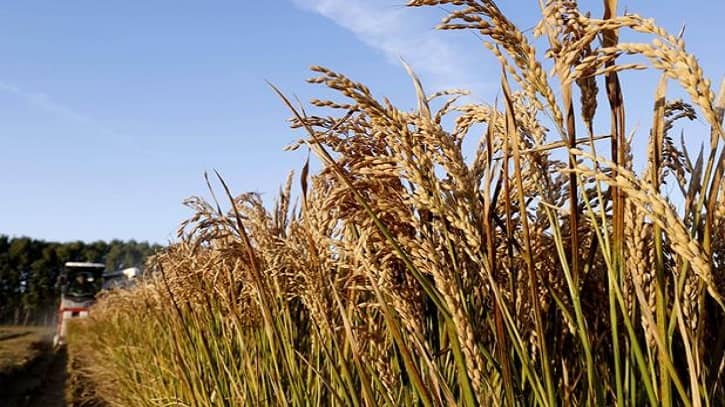
Chinese scientists have achieved a major breakthrough in identifying heat-tolerant rice genes and developing highly resilient rice varieties, marking a significant step toward securing crop productivity in an era of rising global temperatures. Through simulated high-temperature field trials, researchers identified two key regulatory factors in rice that play a critical role in heat-response mechanisms.
The study revealed that single-gene–edited rice varieties produced 50 to 60 percent higher yields than normal conditions. Lines with modifications to both genes nearly doubled their yield potential. The findings were published on Wednesday in the journal Cell by researchers from the Chinese Academy of Sciences’ Center for Excellence in Molecular Plant Sciences, Shanghai Jiao Tong University, and Guangzhou Laboratory.
According to the research team, excessive heat damages rice pollen, disrupts pollination, and reduces grain filling. Understanding the biological processes behind heat tolerance and developing new resilient varieties has therefore become an urgent priority in agricultural science.
The two regulatory factors identified in the study are DGK-7 and MDPD-1. DGK-7 is a kinase that first detects heat signals and generates alerts at the cell membrane, while MDPD-1 is a lipase that relays those signals accurately to the cell nucleus. Together, they act as a biological alarm system, converting external heat into chemical signals that reach the cell center and trigger the formation of heat-resistant compounds.
In the simulated field tests, temperatures were raised to as high as 46 degrees Celsius for one to two hours during the day and lowered at night. The results showed enhanced heat tolerance, improved grain quality, and no loss in yield under normal growing conditions.
Experts say the breakthrough not only advances heat-resilient rice breeding but also lays the foundation for future genetic innovations in major crops such as wheat and maize.