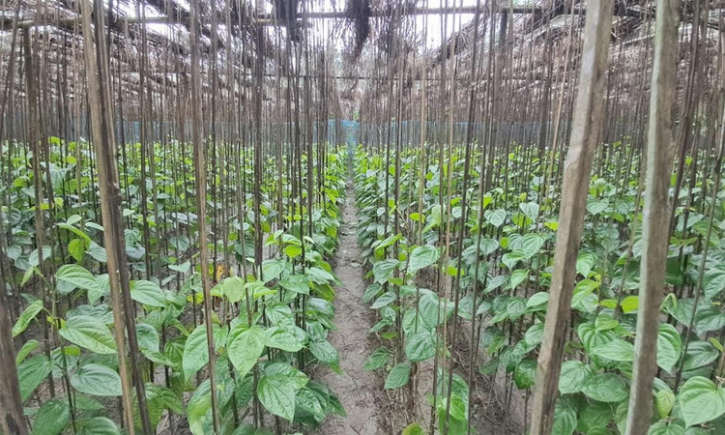
Betel leaf, a staple of Bangladesh’s culinary and cultural traditions, remains an inseparable part of weddings and major social occasions. In Haimchar upazila of Chandpur district, the traditional cultivation of betel leaf continues to flourish, making it one of the region’s most prominent branded products. Betel leaf is among the most profitable crops in this Meghna river coastal upazila, generating nearly Tk 500 million in sales annually.
Local demand is met first, with the surplus supplied to neighboring upazilas. However, farmers say they have never received government incentives despite losses caused by natural disasters and crop diseases. Agriculture officials, on the other hand, maintain that they provide support whenever farmers face challenges.
Haimchar’s population is divided geographically, with most living on the eastern bank of the Meghna River, while others inhabit the char areas on the western side. Fishing and farming are the primary sources of livelihood. Among cash crops, varieties such as Mohanali, Chalta Kotha, Nol Dog, and Sanchi betel leaves have supported families for generations, with many farmers continuing the practice as a hereditary occupation.
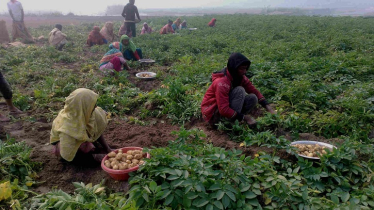
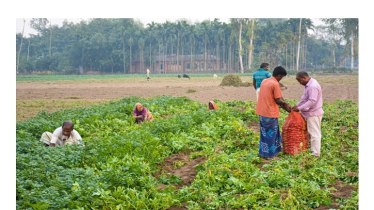
A recent visit to betel leaf farms in the upazila revealed that production remains stable in the absence of plant diseases. Except during winter, betel leaf markets operate daily. Previously, farmers sold mainly to Raipur in Lakshmipur district. Now, a wholesale market has been established at Mohajompur near the upazila headquarters, allowing bulk sales closer to home.
Faruk Islam of Mohajompur village in Uttar Algi Union cultivates betel leaves on 1.5 acres of land, employing three to five workers daily for maintenance. “We have been cultivating betel leaf for generations,” he said. “Natural disasters sometimes damage the farms, but when prices rise, losses are covered. Betel leaf farming sustains us well.”
Ekub Ali, a laborer at the farm, said he learned the trade at a very young age. “We are always engaged in taking care of the farms. The wages from this work run our households. We cannot shift to other jobs now, nor do we want to,” he explained.
Alamgir Hossain, a farmer from Noyani village, inherited his farm from his father. “When diseases attack, production drops and roots sometimes rot, forcing us to replant. We never had formal training, but we learned by observing our elders. Agricultural officers occasionally give advice, which helps us continue farming,” he said.
For traders, the business has also been a lifeline. Nibir Hossain of Uttar Algi village, who has been trading betel leaves for decades, buys directly from farmers in Haimchar and supplies wholesale to Baburhat, Mohamaya, Chandra, and other markets across the district. He also supplies to neighboring districts including Lakshmipur, Shariatpur, Cumilla, Noakhali, and Feni. Similarly, veteran trader Cherag Ali of Kamta village in Faridganj has been involved in the trade for four decades. “Twice a week, I sell betel leaves in Kamta, Munshirhat, and Lakshmipur. I purchase Tk 50,000 worth of leaves from Haimchar, sometimes more, and this trade sustains my family,” he said.
According to Haimchar Upazila Agriculture Officer Md. Shakil Khondaker, 235 hectares of land in the upazila are currently under betel leaf cultivation, with 1,072 small and large farms. Annual sales amount to Tk 500–520 million. “We provide advice and support to farmers whenever natural disasters or crop diseases occur, and we inform higher authorities about the need for incentives. Betel leaf is deeply tied to the heritage of Chandpur, with thousands of people in Haimchar relying on it for their livelihood,” he added.