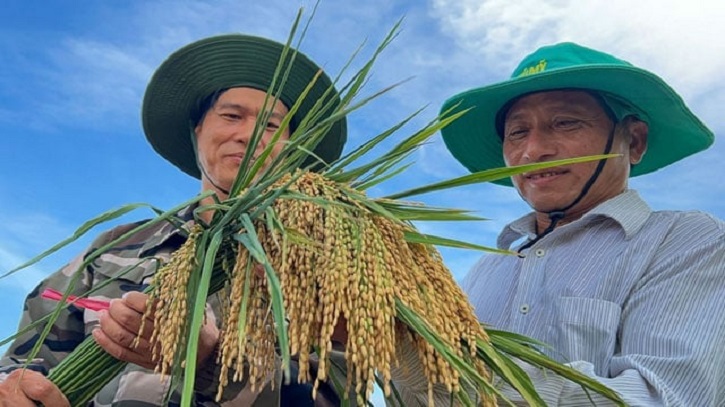
Vietnam is cultivating rice directly on Cuban soil for the first time in an effort to help the island nation combat its acute food crisis.
The Cuban government has granted 1,000 hectares (2,470 acres) of arable land in Los Palacios, 118 kilometers west of Havana, to AgriVam, a subsidiary of Vietnam’s Fujimico Group. Previously, Vietnam had only provided Cuba with technical advice on rice production, but this marks the first time a foreign private firm is directly farming rice in Cuba.
The decision comes after Cuba’s total agricultural output fell by 52 percent between 2018 and 2023, according to the University of Havana’s Center for Cuban Economic Studies. Rice production has been particularly hard hit. Output fell from 300,000 tons in 2018 to just 55,000 tons in 2021 during the pandemic, though authorities say production is gradually recovering. Rice is Cuba’s main staple, with average annual consumption per person estimated at 60 kilograms.
During a media visit in May, an AgriVam representative said yields had reached seven tons per hectare so far, significantly higher than the Cuban farmers’ average. However, the company aims to achieve more.
Vietnam itself faced a food crisis in the 1980s but has since become the world’s third-largest rice exporter and an important adviser to rice-producing countries. AgriVam noted that while Cuba’s climate and temperature are favorable for rice farming, shortages of fertilizers and other agricultural inputs remain a major challenge.
Economist Omar Everleny Pérez and other experts say logistical and financial obstacles, including fuel shortages, transport problems, and frozen funds, could hinder progress. Even when foreign firms earn profits, they cannot repatriate them due to a lack of liquidity and foreign currency in Cuban banks.
Vietnam’s Deputy Agriculture Minister Nguyen Quoc Tri urged Havana earlier this year to remove barriers for Vietnamese investors. AFP reported it had sought comment from both AgriVam and Cuban officials but received no response.
Facing a severe economic crisis, Cuba is urgently seeking foreign investment. In July, Prime Minister Manuel Marrero Cruz announced new measures to attract capital, including allowing fully foreign-owned companies in the hotel sector. In May, after years of promises, Russian Deputy Prime Minister Dmitry Chernyshenko said Russian businesses were preparing $1 billion in investment for Cuba, backed by preferential financing rates. However, he cautioned that much work remained and warned against expecting rapid solutions.